People of Penang
(adapted from the book myPenang)
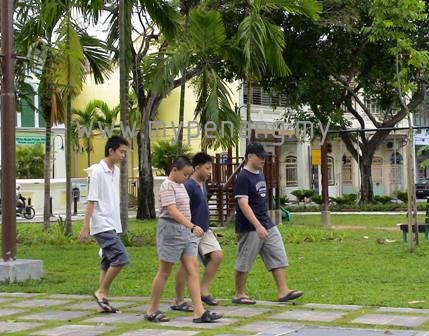
Penang is sometimes described as the ‘Melting Pot of Asia’. The people of Penang are a cosmopolitan mix of Asians and Europeans and many languages are spoken here. Though the population today is grouped mainly into Malays, Chinese and Indians, within these groups are of many diverse communities. To understand the communities and people of Penang it is necessary to see them against the backdrop of Penang’s history.
Despite modern development, communities in Penang have preserved a remarkable degree of their traditional practices, language, dialect and customs. ‘Penangnites’ (people of Penang) are basically traditionalist, sticking to the ‘good’ old ways of doing things.
Many communities in Penang adopt their respective cultural and traditional practices, hence it is no surprise to see festivals and celebrations spread throughout the year (see Malaysian Festivals and Holidays).
Penang is a state in Malaysia with a slightly higher Chinese population, compared to the Malays. It is also the only state in Malaysia with a Chinese Head of State (Chief Minister).
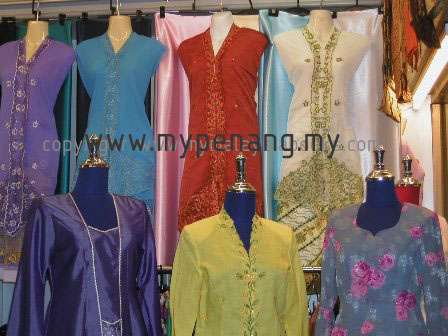
Chinese here are mainly Buddhists, Taoist or Christians, celebrating the important Chinese festivals, such as, the Lunar New Year (Chinese New Year), Mooncake Festival and their own religious celebrations. Religious festivities of Penang Chinese are numerous, but the more significant ones include Wesak, Chap Goh Meh (15th day of the Chinese Lunar Calender), the Nine Emperor Gods festival (‘Kee Long Eair’ in Chinese), Festival of the Heavenly God (the 9th day of the Chinese New Year) and Christmas.
Many ‘old’ Chinese (mainly Hokkien) families in Penang are descendents of the ‘Straits Chinese’ – Chinese who migrated to Penang and the Northern part of Peninsular Malaysia during the 18th can 19th century. Numerous cultural practices and believes of the Penang Chinese today are of ‘Peranakan’ influence. However, cultural practices among the current Chinese population may differ to some extent between the different Chinese dialect-groups (Hokkien, Hakka, Teowchew, etc), especially on practices pertaining to weddings and birthing. With a large Hokkien population in the state, many practices today are of Hokkien origin. Chinese Penangnites also speak the ‘Penang Hokkien’, a unique mix of Hokkien dialect with some Malay words. (Read: The Chinese and the Peranakans)
The Malays are traditionally Muslims, and many in Penang are of native Malays or the peninsular, Arabic, Achenese or Indian heritage. Long before the Chinese, Indian, British or other settlers came, the native Malays had settled in Penang in kampongs, engaging in agriculture and fishing. Many also came from the nearby state of Kedah seeking refuge from the Simese in 1821. The influx of immigrants to Malaya in the 18th and 19t century resulted in some mixed marriages between these native and the immigrants. Many Arab traders who came in the 18th century married the local Malays, assimilating into the Malay population. Malays of Arab origin may be considered one of the oldest immigrant setters in Penang. Others who have assimilated into the Malay population were Indian, Javanese and Bugis. Today their decedents are classified as Malays.
The Malay communities known as ‘Jawi Peranakan’ are descendants of mainly the Indian Muslims who married the native Malays. Many cultural practices of the local Malays here have some Arab or Indian origin. Early Chinese male immigrants who married the Malays formed the Peranakan communities (but are classified as Chinese).
The Malay community celebrates the major Muslim celebrations such as ‘Hari Raya Puasa’ (End of Ramadan Celebration), ‘Hari Raya Haji’ (on 10th month of the Islamic Calendar), many other Muslim celebrations.
The Indian community in Penang consists of two main groups, the Tamil Hindus and Indian Muslims. Other minor groups are the Malayalees and Indian Buddhist. Many of the early Indian Muslim, who came in the 18th century, settled in Penang engaging in business and trading, which we still see today. The Indian Muslims in Penang dominated the spice trade in the 19th century and contributed widely to the economy and literary field.
The major Hindus celebrations are ‘Deepavali (Festival of Lights) and Thaipusium. Indian Muslim celebrates the Muslim festivities. Other races include the Sikhs, Eurasians, Burmese or Thais who adhere to their own religious or cultural festivities. (‘Eurasian’ classified by the British in the 1920s - blurring the heritage of mainly Portuguese descendants or Roman Catholics, Dutch or French descendants and those of European-Asian intermarriages.) The history of Penang also records the Armenians (area where the community settled named Lebuh Armenian) and Jews settling on the Island.